A Week of Confrontations on the Field
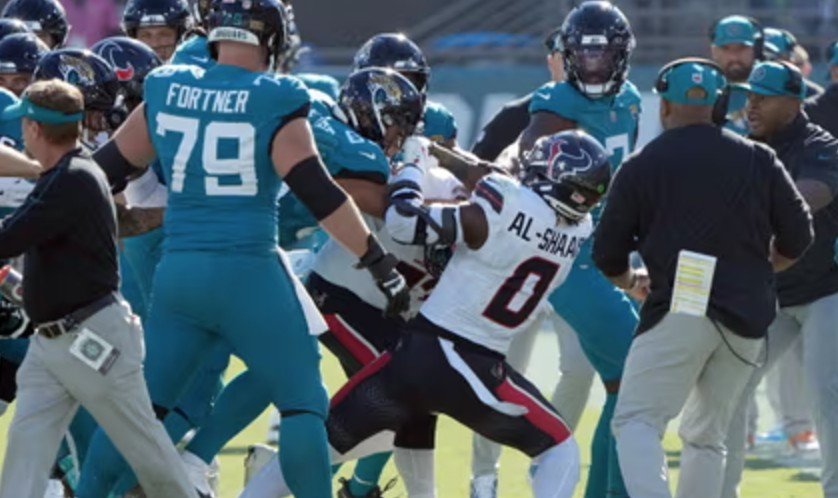
Confrontations Take Over the Field

Texans Late Hit Causes Controversy
In recent high-profile football games, emotions have boiled over, leading to on-field altercations that underscore the critical need for emotional intelligence in sports.
In the NFL, during a matchup between the Houston Texans and the Jacksonville Jaguars, Texans linebacker Azeez Al-Shaair delivered a late hit to Jaguars quarterback Trevor Lawrence as he was sliding, a move that is generally protected under league rules. This action led to a significant on-field brawl, resulting in multiple ejections and leaving Lawrence with a concussion. citeturn0news45
Similarly, in college football, the Michigan Wolverines' upset victory over the Ohio State Buckeyes was marred by a post-game brawl. The conflict erupted when Michigan players attempted to plant their flag at midfield, provoking a physical response from Ohio State players. The situation escalated to the point where police intervened using pepper spray to disperse the players. citeturn0news48
A comparable incident occurred following NC State's win over North Carolina. NC State players' attempt to plant their flag at midfield led to a confrontation with North Carolina players, resulting in a scuffle that drew widespread attention. The Atlantic Coast Conference subsequently fined both universities for violating the league's sportsmanship policy. citeturn0news50
These incidents highlight the importance of athletes developing strategies to manage intense emotions during high-stakes moments. Techniques such as deep breathing, visualization, and mindfulness can aid in maintaining composure. Understanding and respecting opponents' perspectives can reduce misunderstandings and foster mutual respect, which is crucial in de-escalating potential conflicts.
Encouraging open dialogue among players and coaches about emotional experiences can build a supportive environment. Clear communication helps in addressing grievances before they escalate into confrontations. Implementing training programs that focus on emotional intelligence and conflict resolution equips athletes with the skills to handle disputes constructively. Role-playing scenarios and workshops can be effective in this regard.
Coaches and team leaders should exemplify emotionally intelligent behavior, setting a standard for others to emulate. Their response to conflicts can significantly influence the team's overall conduct. By prioritizing emotional intelligence, athletes can navigate the pressures of competition more effectively, leading to a more respectful and harmonious sporting environment.
Planting Flags Gone Wrong

